
The Agency Edge: GEO is the new SEO
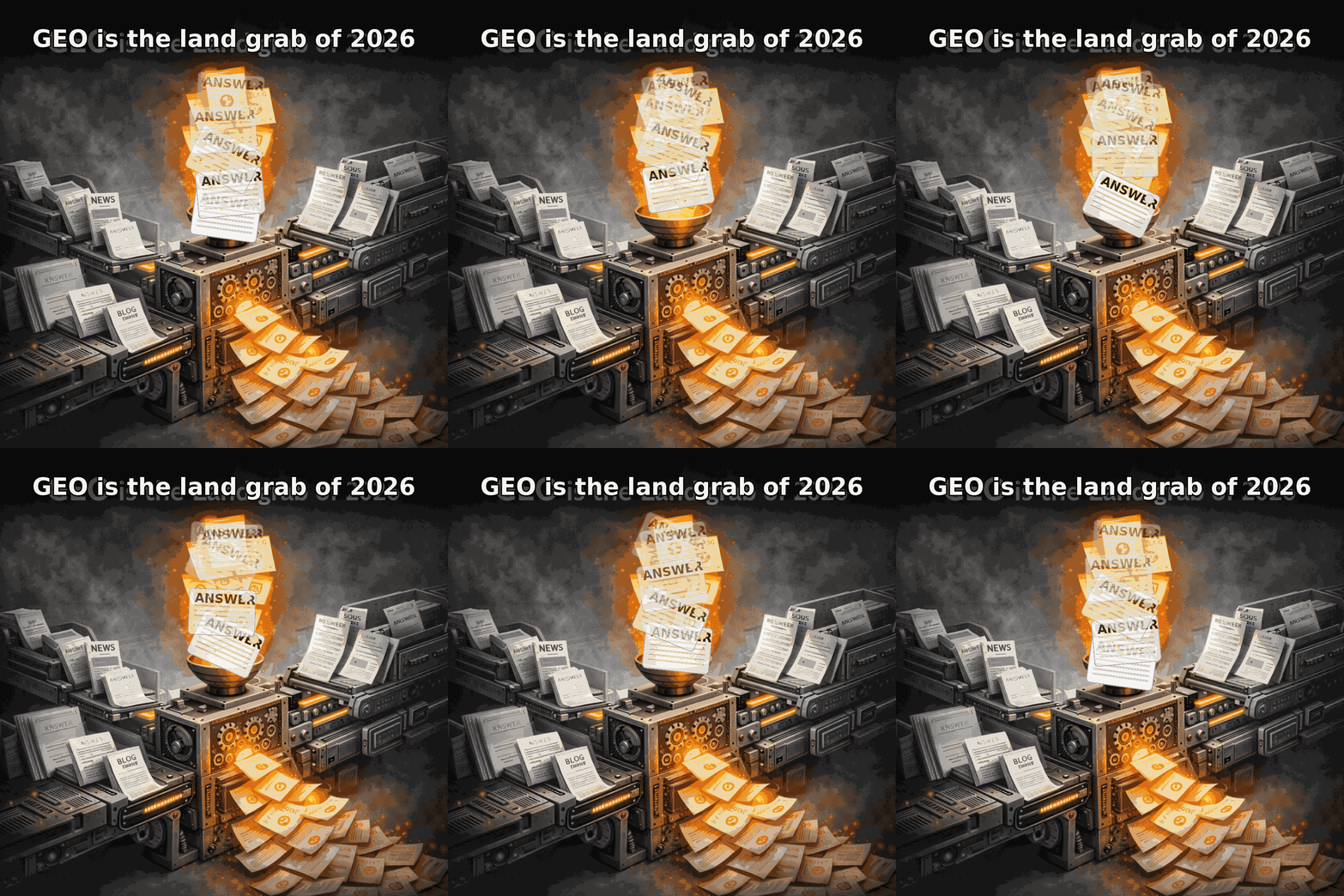
GEO is the land-grab of 2026. PR should lead it.
The talk of the PR agency world is that people are quietly switching behaviours and it’s a huge opportunity for the industry to take responsibility for GenAI Engine Optimisation (GEO) for their clients.
Instead of typing a query into Google, scanning results, clicking a few links and making up their own mind… more and more people are instead simply asking GenAI and accepting the first answer they see.
That “ask-and-accept” habit is spreading fast and what is Gen AI relying on for those answers? At the moment, it’s overwhelmingly earned media coverage and open, readable, third-party content.
The big opportunity: earned coverage becomes the fuel for answers
That is a huge opportunity for PR agencies and their clients, because it shifts the value of earned media from “reach” and “reputation” to “being the material the answer is built from.”
Where AI gets its information from
So, where do agencies need to place this earned media to appear in the answers of GenAI tools like ChatGPT? It varies by platform, but studies of sources used in AI answers keep surfacing the same clusters:
- Wikipedia (baseline facts and definitions)
- Reddit and other community Q&A (real-world opinions, experiences, use cases)
- YouTube (especially when the content is easy to extract/understand with transcript in the description)
- Mainstream news / wire sources (for “what’s happening?” and credibility signals). Long live the press release!
- And the less obvious winners: comparison, review, and “best X for Y” list-style content — the stuff that helps a model answer intent-led questions quickly (including niche forums and specialist sites).
Where AI bots may struggle to find your website
On the opposite side, it’s worth also considering where the AI bots aren’t finding its answers. Again, not universal, but very common:
- Paywalls / logins / membership gates: if a bot can’t access the text, it can’t use it.
- Bot blocking: a growing chunk of the web is actively choosing to block AI crawlers.
- JavaScript-heavy sites: if key content is rendered client-side, some crawlers may only see a thin HTML shell.
What agencies should do now…and fast to keep up with AI bots
1) Reset the scoreboard
These two client-friendly questions are a great place to start:
- For a client’s priority topics, what does GenAI currently say about us and our competitors?
- And what sources is it drawing on when it says it?
2) Build the “answer landscape” for each client
Pick the key topics that matter commercially for the client’s business (category, problems you solve, “best for…”, comparisons, pricing/value, trust/safety, implementation, ROI).
Then map:
- What questions people actually ask (not what we wish they asked)
- Which outlets, communities and creators consistently show up
- Where the client is missing — and why?
3) Rebuild earned media around “machine-readable proof”
This is the real land-grab.
It means:
- More specific stories (niche, specialist outlets, creator channels, communities)
- More evidence (examples, numbers, clarity, third-party validation)
- More formats that answer intent (“X vs Y”, “best for…”, “how to choose”, “what to avoid”)
4) Fix owned content so it’s usable by both humans and machines
Most brand content is still written like a brochure.
Reformat it into:
- Comparison pages and decision guides
- “Best for…” scenario content
- FAQ hubs that mirror customer language
- Structured pages with clean headings and quotable lines
And make sure you’re not accidentally hiding it behind technical blockers.
5) Treat video as an “answer” asset, not just brand content
Publishers are using video more and more. For clients, this means spokespeople and subject experts need to be confident in podcast/video formats and the content needs to be packaged so it can be understood and reused (clear titles, descriptions, transcripts where appropriate, strong “what it is / who it’s for / why it matters” framing).
6) Get your team ready to deliver (this is a capability shift)
Someone in the agency needs to own GEO. They can be helping clients and their agency teams:
- Monitoring how clients appear in GenAI answers over time
- Updating media strategy and target lists to include creators + communities + specialist sources
- Coaching clients on content formats that win in an answer-first world
- Light governance for accuracy and corrections (because AI summaries can be confidently wrong!)
The Agency Edge view
This is a rare moment for PR agencies to lead the creative services world.
The rulebook is changing, the measurement is shifting. If you get your clients visible inside Gen AI answers now, you’ll be hard to dislodge later.
And if you’d like a practical way to kick-start it, we’ve created GEO Training For Agencies at The Amber Group — designed to help agency teams get their people ready to deliver.
View our latests posts
- The Agency Edge: Neuroinclusive Workplaces: Are You Missing Top Talent?
 Are Your Best Performers the People Most Like You? Most agency leaders have an unwritten idea of what a high performer looks like. We tend to reward people who respond… Read more: The Agency Edge: Neuroinclusive Workplaces: Are You Missing Top Talent?
 - The Agency Edge: Is AI making your Agency think less?Four tips to encourage critical thinking As an agency leader, do you have a nagging worry about the use of AI in your business?Several recent conversations with agency leaders have… Read more: The Agency Edge: Is AI making your Agency think less?
- The Agency Edge: Constructive Feedback TrainingAgency managers must get better at difficult conversations Plus try our new Constructive Feedback AI avatars for free Agency people are usually good with people. It’s one of the reasons… Read more: The Agency Edge: Constructive Feedback Training
- The Agency Edge: Mindset Before TitleThe talent challenge: Promoted…but prepared? “We had a young account executive who was brilliant. They smashed through tasks, kept clients happy and got great results. Then we promoted them to… Read more: The Agency Edge: Mindset Before Title
- The Agency Edge: New Rules of People ManagementWhy employment law is no longer just an HR issue in agency life For most agencies, employment law sits within HR. Managers focus on delivery, clients and team performance, calling… Read more: The Agency Edge: New Rules of People Management
- The Agency Edge: The Human AdvantageEmotional Intelligence: the Agency advantage AI can’t copy “The ability to deal with people is as purchasable a commodity as sugar or coffee and I will pay more for that… Read more: The Agency Edge: The Human Advantage